
Flanges are crucial components used to connect pipes and provide easy disassembly for inspection and replacement. Though they are designed to withstand harsh environmental conditions, they may get damaged due to incompatibility, improper installation methods, or aging.
Today we will evaluate the different aspects of the flanges, understand how and what factors can cause their damage, and discuss typical prevention methods. Let’s learn together.
Common Causes of Flange Damage
There are a few typical causes of flange damage. We have listed the most common and crucial causes here.
Improper Installation
Tool compatibility and proper installation are essential. If you have made wrong selections or haven’t installed the system properly, it may cause damage to the flanges.
Some areas receive excessive compression while others may not even receive sufficient compression. Common installation problems are:
- Uneven bolt tightening
- Incorrect bolt torque
- Poor flange alignment
- Incorrect gasket positioning
- Using damaged bolts or nuts
- Over-tightening the joint
- Under-tightening the joint
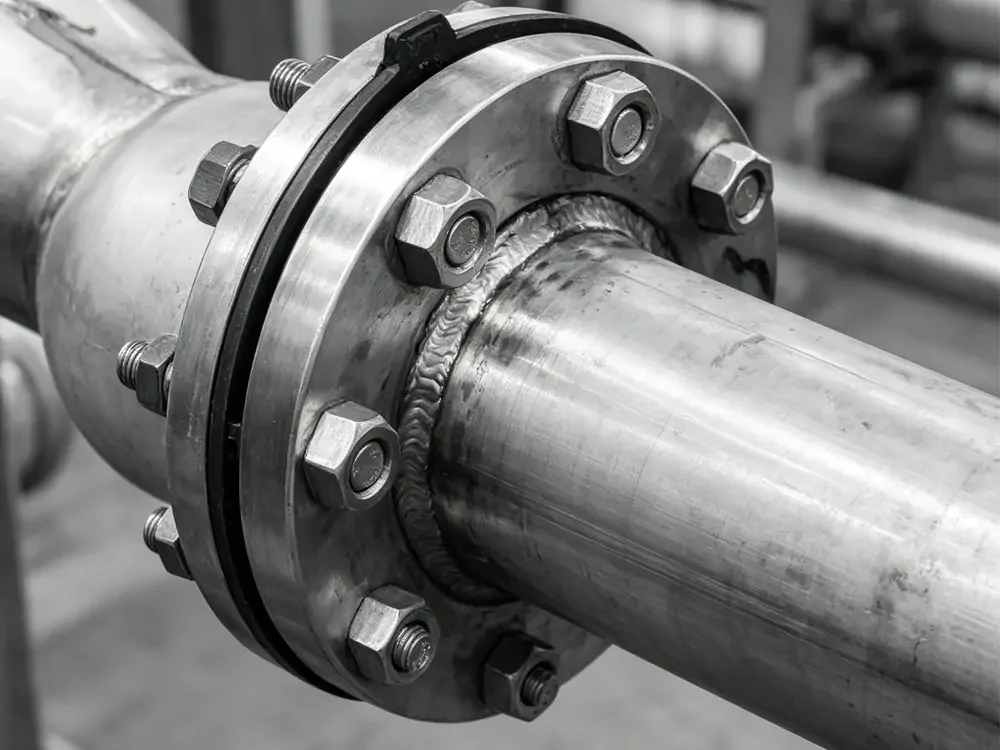
Excessive Bolt Torque
Adequate torque is essential for creating the seal between the two flange faces. But applying excessive torque can be a significant issue in this case. It can cause several issues associated with the systems, such as:
- Flange deformation
- Bolt stretching
- Cracking around bolt holes
- Gasket crushing
- Distortion of the sealing face
Flange Misalignment
Flange faces should be properly aligned in all cases. Misalignment can cause excessive stress on the system and may result in failure and damage to the flange faces.
The typical causes are:
- Poor pipe support
- Incorrect fabrication
- Thermal movement
- Improper installation
- Pipe settlement
- Equipment nozzle movement
Corrosion
Whenever selecting a flange for marine or outdoor conditions, you must know whether it can withstand corrosion damage.
There are a few types of corrosion that could damage the flange and may cause system failure.
- General corrosion
- Pitting corrosion
- Crevice corrosion
- Galvanic corrosion
- Erosion-corrosion
- Stress-corrosion cracking
Gasket Failure
A gasket acts as an adhesion between the two flange faces. Selecting the wrong gasket can damage the flanges.
The common gasket-related issues are:
- Incorrect gasket material
- Incorrect gasket thickness
- Damaged gasket
- Reusing a gasket that should be replaced
- Incorrect gasket positioning
- Excessive compression
- Insufficient compression
Thermal Expansion and Temperature Changes
Temperature changes have a big role here. They may either expand or contract the metallic components of the system. If the thermal movement is not properly accommodated, it may reach the flange connections.
Repeated thermal cycling causes:
- Fatigue
- Bolt loosening
- Flange distortion
- Gasket relaxation
- Cracking
- Leakage

Pressure Surges
Sudden changes in pressure can cause damage to the flange due to high load. It causes several issues, such as:
- Rapid valve closure
- Pump startup or shutdown
- Compressor operation
- Water hammer
- Emergency shutdowns
- Sudden changes in flow
Mechanical Load and Vibration
Mechanical Load and vibration occur due to equipment vibration, pipe movement, unsupported sections, and connected machinery. If this vibration gradually reaches the flanges, it can loosen the connections and has the following potential consequences.
- Bolt loosening
- Gasket movement
- Fatigue cracks
- Flange-face wear
- Repeated leakage
Effects of Flange Damage
Do you know flange damage has some impacts? Let’s know the significance of those impacts.
Fluid and Gas Leakage
One of the most dangerous impacts of flange damage is fluid and gas leakage. Flanges help maintain the system and prevent damage. But fluid and gas leakage can cause safety risks.
Here is what often leaks through the system.
- Water
- Steam
- Hydraulic fluid
- Fuel
- Oil
- Chemicals
- Compressed air
- Natural gas

Pressure Loss
Flanges help maintain adequate pressure in the pipelines. For example, hydraulic cylinders require the essential pressure in such cases.
Leakage due to flanges causes:
- Waste of the fluid or materials
- Decrease in pressure
- Reduced efficiency of the equipment
Safety Hazards
Safety issues are pretty common. This is because of the leakage of poisonous gases or toxic chemicals. For example:
- Poisonous gases can make personnel unconscious.
- Spilling of acid or toxic chemicals can burn the skin.
Increased Maintenance Costs
Since the damage requires maintenance, it causes increasing costs in the future. The costs depend on:
- Labor
- Gaskets
- Bolts
- Inspection
- Equipment downtime
- Replacement components
The costs can increase as the problems snowball. Sometimes, you even have to replace the whole bolts, gaskets, or flanges.
Best Practices to Prevent Flange Damage
If you are worried about flange damage and want to avoid it in the future, we have added the best practices as follows.
Select Correct Flange
The correct flange is essential because it offers compatibility and improves the overall durability and efficiency of the tasks. When choosing the correct flange, you should consider factors such as:
- Flange material
- Pressure rating
- Temperature rating
- Flange type
- Facing type
- Pipe size
- Corrosion resistance
- Applicable standards
Use Proper Installation Methods
Proper installation is essential to avoid any damage during usage. Consider the following installation tips.
- Clean the flange faces before assembly.
- Check alignment before tightening.
- Inspect bolt and nut condition.
- Install the correct gasket.
- Tighten bolts in a controlled sequence.
- Use calibrated torque equipment where specified.
- Avoid forcing misaligned piping together.
Protect Sealing Face
The sealing face should be protected from impact, contamination, and corrosion. Here are a few factors, such as:
- Use protective covers.
- Avoid stacking flanges carelessly.
- Keep sealing faces clean and dry.
- Prevent contact with abrasive surfaces.
- Inspect flanges before installation.
Control Corrosion
Corrosion control is essential. It should match the operating environment. The best practices include:
- Select corrosion-resistant materials
- Apply suitable protective coatings
- Control moisture exposure
- Prevent galvanic contact
- Perform regular inspections
- Maintain proper drainage
Conclusion
Flange damage can occur due to minor issues. For example, scratches, loose bolts, corrosion spots, or installation errors can cause flange damage. To avoid flange damage, choose the correct flange, ensure proper alignment, control bolt tightening, select suitable gaskets, protect against corrosion, and perform regular inspections.
If you are looking for high-quality flanges, contact Ekxia. We offer a wide range of tools and options. Our tools are of high quality and deliver exceptional performance in the long run. Check out our solutions right away!