


Hydraulic cylinders are a must-have in modern machinery. They help equipment lift, push, pull, and move heavy loads with ease without the need for human effort. For all these tasks, these cylinders are built from very strong, reliable material. But it does not mean they last forever. Over time, the seal inside the cylinder wears out and needs repacking. But if you are new to this process, you might wonder: How to repack a Hydraulic Cylinder in the right way? If it feels technical to you, worry not! In this guide, I will discuss the entire repacking of hydraulic cylinders. So let’s get started.

Hydraulic systems are the heart of several industries involved in power generation and implementation. The hydraulic fluid plays an integral role in power generation systems. Therefore, the right hydraulic oil type and quality are necessary for secure and intended operations.
There are several types of hydraulic fluids, ranging from low-efficiency to high-efficiency. Today, we will explore various types of hydraulic oil, understand each one, and compare them to improve efficiency and quality. Let’s know!

A hydraulic pump is an important component of every hydraulic system. Every machine or device that works through a hydraulic system has this pump. Its role is to pump hydraulic fluid through different components and generate pressure. This pressure then makes machinery work, i.e., lift, push, and so on. Interestingly, many people don’t know about the basics of hydraulic pumps. So they ask: How does a hydraulic pump work?
Understanding how these pumps work is crucial if you have any hydraulic machines. In this article, I will discuss the basics of a hydraulic pump and its working in easy steps. So, let’s get started.

The use of bolts and nuts is common for assembling different parts and components. In fact, assembly of metallic parts cannot be complete without them. A torque wrench is a dedicated tool used to fasten nuts and bolts with precise torque. However, torque wrenches come in different sizes, which can be confusing. That’s where this guide to torque wrench sizes will help you. In this article, I will discuss different torque wrench sizes and their ideal use cases. After reading, you’ll know which of the torque wrench sizes you should use for your specific use. Let’s begin!

Using a torque wrench is common for tightening bolts and fasteners. However, there are types of these wrenches. Among those, hydraulic torque wrenches are prevalent because they do not rely on manual force for operation. Instead, they use a hydraulic pump to generate force to tighten the bolt. Over time, these hydraulic torque wrenches can develop problems. In this article, I will discuss some common problems and solutions for hydraulic torque wrenches.

Hydraulic hand pumps are among the most underrated devices used across different industries. This device works by manual effort and requires human involvement. Various hydraulic hand pumps are available in the market. All of these have different specifications and properties. This makes people confused about how to choose the right hydraulic hand pump.
Undoubtedly, the right pump is a game-changer for specific load-lifting tasks or applications. At the same time, choosing a hydraulic pump of the wrong specification may not work. As a result, you will end up wasting your hard-earned money. Therefore, it is crucial to know what matters when selecting a hand pump. In this article, I will discuss these factors that will help you choose the right hand pump. So, let’s get started.

Hydraulic cylinders are an essential part of several machines. These include excavators, forklifts, tractors, and industrial equipment. These cylinders rely on hydraulic fluids to work smoothly. However, sometimes air can get trapped inside the hydraulic cylinder, causing problems. So the question is: How to bleed air from a hydraulic cylinder? Remember, even small air bubbles can cause serious performance problems.
For example, you might notice jerky movements, slow operation, and strange noises. All these issues ultimately damage the entire system over time. That’s why bleeding the air becomes crucial. But many beginners become confused at this point. Hence, to help you get it, I will discuss a step-by-step process for air bleeding from a hydraulic system in this guide. So let’s get started.

Bolts play a crucial role in several systems and machines. When you tighten a bolt, you most likely wonder whether it is too loose or too tight. This small doubt actually leads to several big problems later. A too-loose bolt can cause parts to fall apart, while a too-tight bolt can damage the part. That’s where a torque wrench comes into play. But the question arises: How to Use a Torque Wrench?
A torque wrench is a specialized tool that helps you know exactly whether a bolt is tight. Instead of guessing, it gives you control and confidence, making sure everything is secure. However, the proper way to use it is crucial. If you don’t know, worry not! In this article, I will guide you step by step on how to use a torque wrench and how it works. So let’s get started.

In industries such as oil and gas, power plants, and construction, bolts play a key role. They help hold some critical parts together and ensure the safety and performance of the entire system. But what if this bolt gets loose? Definitely, the results will be leaks, machinery damage, or even failure of the part. That’s where hydraulic bolt tensioners come into play.
Actually, when you use a traditional tightening method like using a wrench, it is not very effective. For example, a wrench can create friction and apply uneven force. However, hydraulic tensioners apply a direct and even force to tighten the bolts. But how do these tensioners actually work, and where are they used? To answer this, I will explain bolt tensioners, their types, and their applications. So let’s get started.
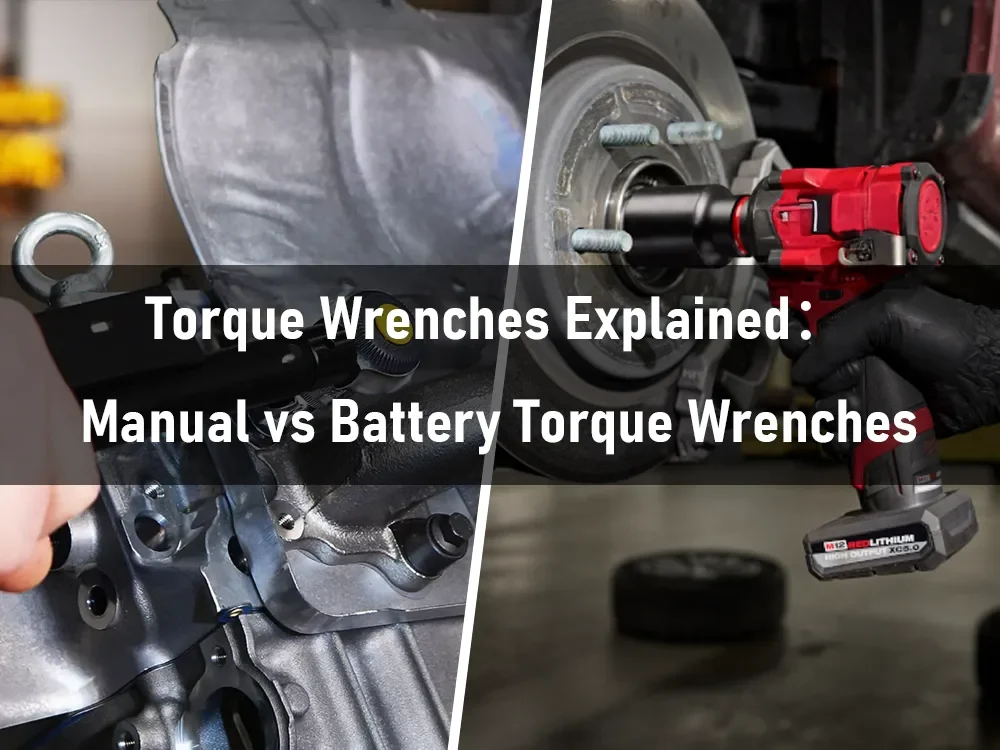
In machinery, nuts and bolts play a crucial role. A slightly loose connection of nuts or bolts can cause the entire machinery to fail. However, overtightened nuts are also a trouble as they wear out quickly. A right torque ensures a durable approach and reduces the chances of failure.
However, there are two crucial types of torque wrenches— battery torque wrenches and manual torque wrenches. You might get confused about which one you should choose. If it is, our experts have evaluated both types and set up a head-to-head comparison. Let’s look at how these two types of torque wrenches differ.